
This series invites you to engage in insightful conversations with community leaders, field experts, and your peers, while refining the skills to shape lasting career success.
Next Steps in Your Academic Journey: Applying for Internships, Fellowships, and Graduate School, This event features a dynamic panel of community leaders and experts guiding undergraduates and recent graduates through their next academic and professional steps in computing and AI-powered scientific research and education projects.
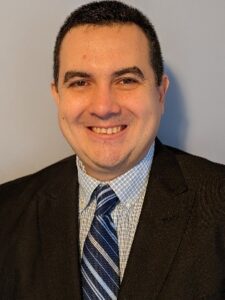
William F. Godoy is a senior computer scientist in the Computer Science and Mathematics Division at Oak Ridge National Laboratory (ORNL). His interests are in high-performance computing (HPC), programming models, scientific software, and workflows. Godoy received a Ph.D. degree in mechanical engineering from the University at Buffalo, The State University of New York (2009). Previous experience include a staff position at Intel Corporation (2012-2016) and a postdoctoral fellowship at NASA Langley research center (2009-2012). He has served as a mentor and co-mentor for several students and current professionals through his professional career. He is a senior member of the IEEE Computer Society, and a member of ACM, ASME and US-RSE, while serving in several technical venues and conferences.
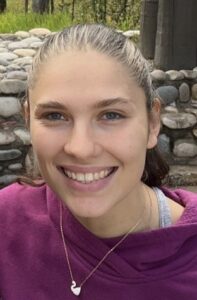
Alexandra Ballow is sixth-year graduate student in the math department at Montana State University. She grew up in a (very) small town in northwest Ohio and was an undergraduate at Youngstown State University. During her time at YSU, she joined Alina Lazar to spend a summer at LBNL through the SRP program. Her current mathematical interests lie around quantum computing (quantum topology, higher categories, mathematical physics). Outside of work she enjoys hiking, especially in Yellowstone.
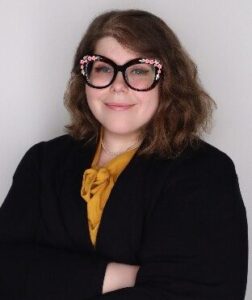
Kristen Hallas earned her Bachelor of Science in Applied Mathematics, with a minor in Computer Science, graduating with honors from the University of Texas Rio Grande Valley (UTRGV). She also earned her PhD in Mathematics and Statistics with Interdisciplinary Applications from UTRGV. Her doctoral research developed data-driven approaches to materials science and engineering. In her dissertation, Kristen proposed a four-step pathway to guide domain scientists and engineers in deploying artificial intelligence methods for scientific discovery in their facilities. She demonstrated this pathway through three interconnected case studies, including two with direct relevance to research efforts at Lawrence Livermore National Laboratory. Throughout her studies, she has also collaborated with Argonne and Oak Ridge National Laboratories. Kristen is currently a Postdoctoral Fellow at UTRGV’s Institute for Advanced Manufacturing, where she focuses on materials discovery for fusion-energy applications. Her work explores how AI, robotics, and additive manufacturing can accelerate the development and evaluation of advanced materials. Beyond research, Kristen is committed to expanding access to STEM research careers. She is passionate about helping students see themselves as scientists, engineers, and technology leaders.
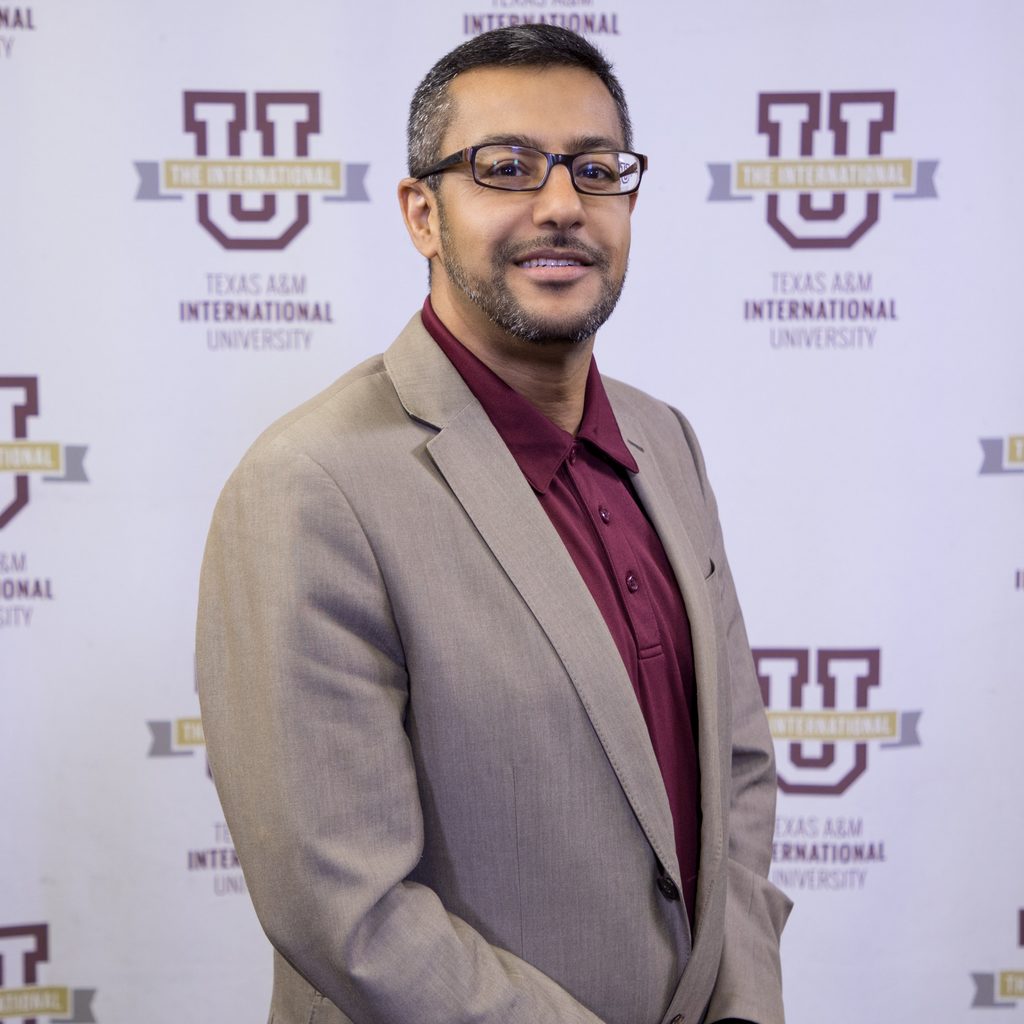
Prof. Dr. Mustafa Al Lail is an Associate Professor of Computer Science and Engineering and the Director of the Artificial Intelligence Center at Texas A&M International University (TAMIU). Throughout his career, he has had the opportunity to learn from and contribute to various institutions. This experience includes serving as a visiting scholar at esteemed institutions like Oak Ridge National Laboratory, Lawrence Berkeley National Laboratory, and Colorado State University, and holding a faculty position at Seattle University. He holds a Master’s and a Ph.D. in Computer Science from Colorado State University, where he benefited from the guidance of distinguished professors: Dr. Indrakshi Ray, a cybersecurity expert, and Dr. Robert B. France, a leader in software engineering research. His foundation began with a Bachelor of Science in Computer Engineering from King Fahd University of Petroleum and Minerals in Dhahran, Saudi Arabia. His research interests include artificial intelligence and machine learning, software engineering, cybersecurity, formal methods, and high-performance computing. Dr. Al Lail is an IEEE Senior Member and served as the program committee co-chair for the IEEE ISORC 2025 conference.