
Dr. Mike McKerns, staff scientist at Los Alamos National Laboratory (LANL), has always been involved in educational research and looks for ways to inspire more people from all backgrounds to pursue science. “I love science, and I think that it’s a fruitful path that can lead to a lot of enjoyment,” says Dr. McKerns. It is one reason he participates several times a year in the Computational Research Leadership Council (CRLC) Seminar Series, a collaborative effort between six Department of Energy (DOE) national laboratories and Sustainable Horizons Institute (SHI). “Sometimes people worry that science is too hard and it’s too much to do, and I just want to get people excited about it, to help people see that it’s an achievable thing to do.”
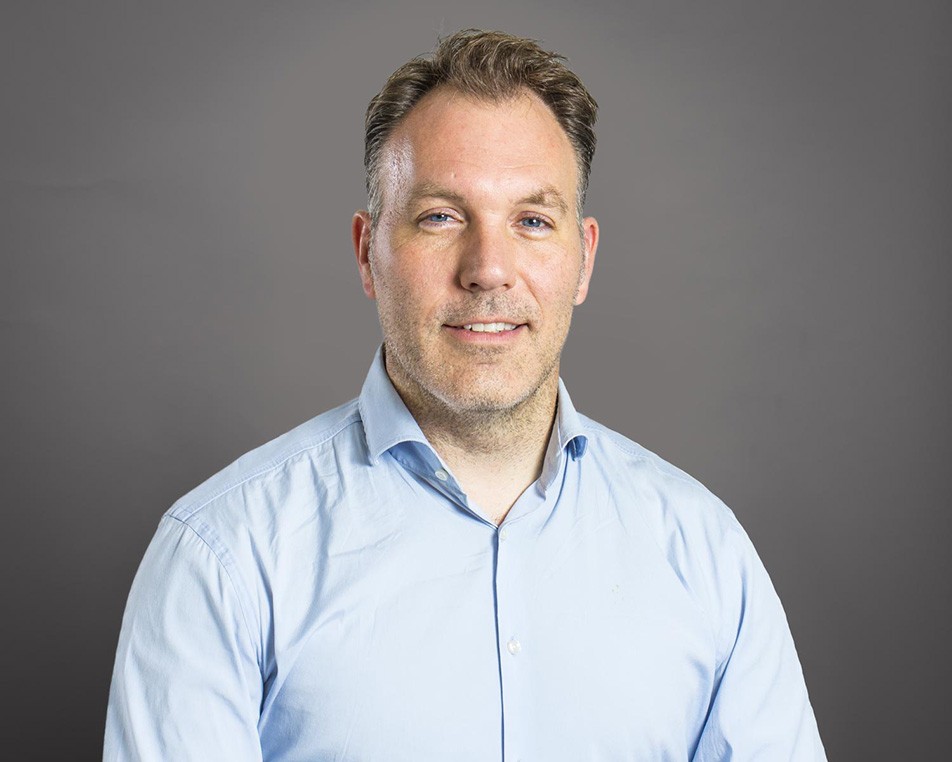
Dr. McKerns has spoken to a wide range of academic institutions, including community colleges and Historically Black Colleges and Universities, such as North Carolina Agricultural and Technical State University, the largest historically Black university in the U.S. His seminar, “Mystic and Pathos,” is about the summer project he started when he was a graduate student that eventually grew into the work that he does now as an AI expert, developing software that utilizes AI and machine learning in the optimization and predictive modeling of complex physical systems under uncertainty. “I talk about my path, the development of open source software, and real current science projects where AI is being used to push forward development. It’s a story that a lot of people like.”
Students and faculty seem to agree. After each seminar, he shares his contact information and where students and faculty can look for fellowship information and job openings at the LANL. As a result, several students have applied to LANL, faculty have expressed an interest in leveraging the tool that Dr. McKerns uses at LANL, and Dr. Gerard G. Dumancas, Associate Dean of Research and Program Innovation (Honors College) and Professor of Chemistry at North Carolina A&T State University, has applied for a visiting faculty program for a second year. “I connected Professor Dumancas with myself and Dr. Sven Vogel and Dr. Daniel Savage, who are domain experts at Los Alamos National Laboratory in neutron diffraction,” says Dr. McKerns. “We worked together on a proposal for Professor Dumancas to help establish a pipeline between that university and the national labs. Hopefully, we can grow that.”