
After working at a non-governmental organization focused on supporting people living with HIV/AIDS in his home country of Ghana, Francis Owusu-Dampare knew he wanted to combine studies in computer science and health analytics. This led him to pursue a Master’s in Bioinformation also at the University of Texas at El Paso, where his program director told him about the Computational Research Leadership Council (CRLC) Seminar Series, a U.S. Department of Energy (DOE) National Laboratories’ effort to broaden connections with universities and rejuvenate the national labs’ workforce. And it was this seminar that convinced him to apply for the Sustainable Research Pathways (SRP) workshop, which has informed and strengthened his commitment to bioinformatics.
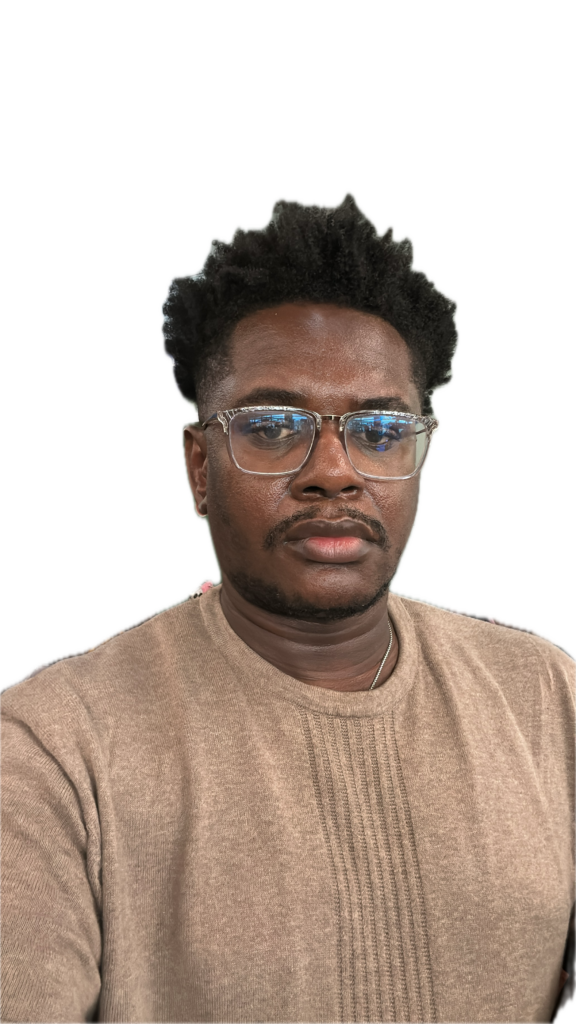
“As an international student, I had held back on applying for SRP,” says Owusu-Dampare. “But the CRLC seminar opened my mind to some of the research going on within the Department of Energy and national labs that fit my interests.”
As part of the 2024 SRP cohort, Owusu-Dampare was connected with Dr. Steven Hofmeyr, a Computer Systems Engineer in the Applied Mathematics and Computational Research division at Lawrence Berkeley National Lab. At the time, Dr. Hofmeyr was beginning new research into how climate affects the spread of disease, and Owusu-Dampare was asked to help with a background literature review. He would also join group meetings, including about high-performance computing (HPC)-related issues, and the team and Owusu-Dampare would discuss his findings. He also went to other presentations and seminars at Berkeley Lab.
“Being paired with a mentor was a big factor in my decision to apply for SRP,” says Owusu-Dampare. “My research is aligned with Dr. Hofmeyr’s, and he gave me an opportunity to research a topic that is quite new and to work in a national lab where I got to know other researchers.”
Now, Owusu-Dampare is a Ph.D. student in Computational Science at UT El Paso. Having just passed his qualifying exams, he will ask Dr. Hofmeyr to serve as an outside member of his thesis committee.
Owusu-Dampare’s research examines viral loads in wastewater samples to predict disease, and after he graduates, he hopes to pursue epidemiological modeling or a related field.
He is incredibly grateful to CRLC and SRP for opening his eyes to different research directions and greater opportunities. “If you’re in a Master’s or Ph.D. program, you have some idea about where you want to go, but if you attend a CRLC seminar or participate in SRP, you get to know research you haven’t even thought of,” says Owusu-Dampare. “And then you not only meet other people involved in what you want to do, but you can also build a relationship and possibly collaborate. It is a great opportunity.”