
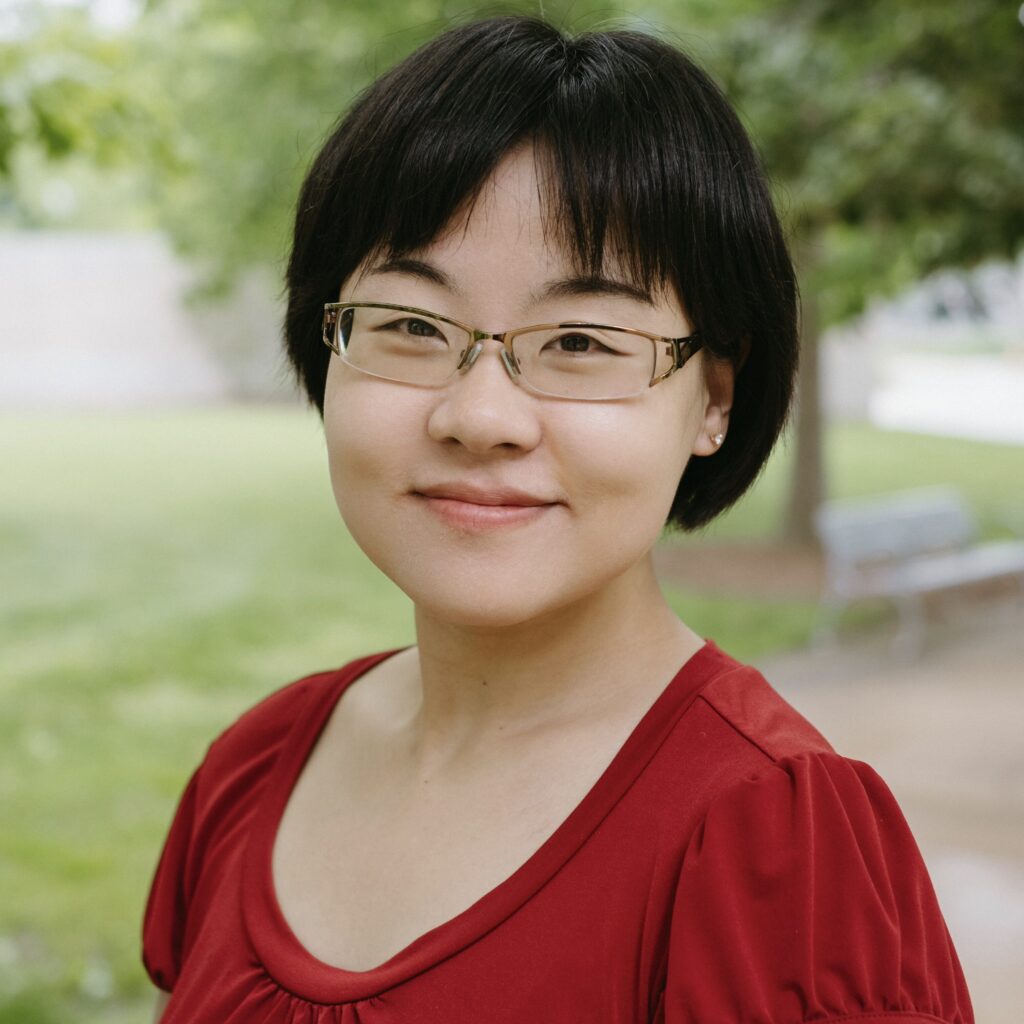
As a senior research software engineer at the National Center for Supercomputing Applications at the University of Illinois Urbana-Champaign, Pengyin Shan’s work centers on developing accessible research applications for complex datasets. While she has no background in cybersecurity, as a coder working with high-performance computing (HPC) centers, Shan recognized the urgency of developing a deeper understanding of cybersecurity needs. This prompted her to apply to the Fellowship Program at Trusted CI, the National Science Foundation (NSF) Cybersecurity Center of Excellence.
The Trusted CI Fellowship Program empowers members of the scientific community with different perspectives and knowledge of cybersecurity and an understanding of Trusted CI’s services through virtual and hands-on training sessions, attending the NSF Cybersecurity Summit, and other resources. “Each week brought something I had not expected, whether that was a new way of thinking about cybersecurity, an NSF program that I had not previously engaged with, or a speaker sharing timely insights from an emerging domain,” says Ms. Shan. “The format of the learning is not like a regular classroom; it is more engaging.”
The interactive approach to learning also means that Ms. Shan’s non-traditional background helps cybersecurity experts further refine their approaches to certain problems. “The gathering with previous fellows at the 2025 NSF Cybersecurity Summit truly excited me. Hearing their experiences, learning about the cybersecurity challenges they are tackling, and seeing the strong sense of collaboration within the Trusted CI community made me feel welcomed and motivated to contribute my own perspectives and experiences,” says Shan. “Now I am able to provide feedback to experts, and together we can figure out the best way to adopt some of the cybersecurity practices into the research software engineering.”
The Trusted CI Fellowship experience has also helped Ms. Shan become a better coder who pays greater attention to cybersecurity. “Previously my priority was what my collaborator or what my user wanted, but going forward, I will also consider the security perspective,” says Ms. Shan. “Like I might say to a collaborator, ‘We can twist this feature so that we not just give you a great user experience, but we also keep your data and your identity safe.’”
She is currently researching the security of research software communication channels, with a focus on how AI-mediated tools are reshaping the threat landscape. She would like to share her findings at the next Cybersecurity Summit and is developing a project to address the security vulnerabilities she identified during her fellowship.
“As a Fellow, I have learned things that I never expected to learn and have been inspired to explore topics I had never thought about before,” says Shan. “This experience has opened my mind, allowed me to connect with a great community, and broadened my future research and career options.”