
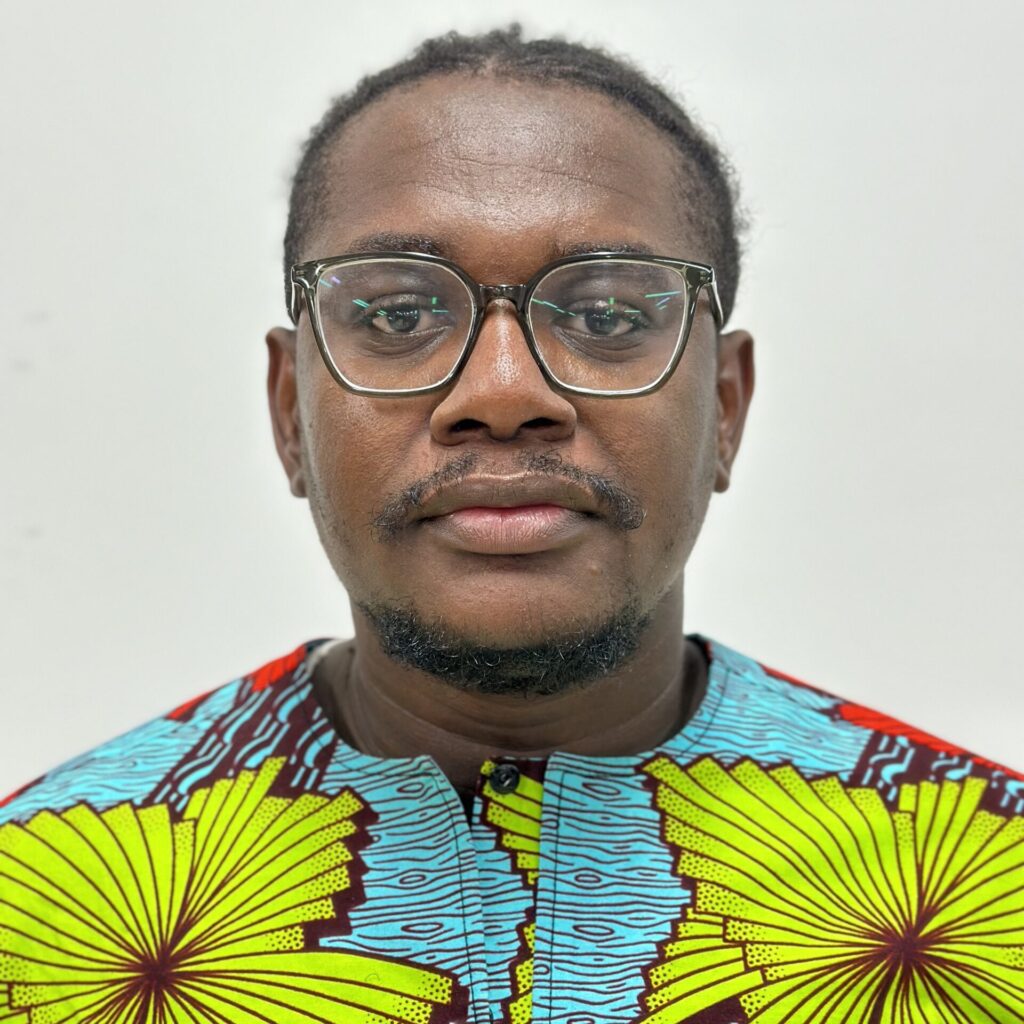
Name: Francis Owusu-Dampare
Pronouns: He/Him
Institution: University of Texas at El Paso
Department: Bioinformatics
Biography:
Francis Owusu-Dampare, that’s me, is currently a graduate student of Bioinformatics (MS) at the University of Texas at El Paso. Before coming to the USA, I was a Project Manager/Assistant Director of a Non-Governmental Organization in Ghana. Ghana, being the country where I was born some thirty-five years ago, is where I obtained a BS degree in Computer Science from the Kwame Nkrumah University of Science and Technology , as well as an MPhil in Management Information Systems from the University of Ghana. Swimming and chess (these two I am not a pro in), tennis, or watching a movie is what I resign myself to during my leisure, and I look forward to polishing my French (Oui!), and learning Spanish (Si?) Having worked on several successful research and intervention projects and with agencies such as USAID, PEPFAR, YALE University, University of Rochester, University of Ghana School of Public Health and the Noguchi Memorial Institute for Medical Research on public health and infectious diseases among at-risk groups, my passion is to help provide practical, scientific, and working solutions to heath and biological issues using data and computing methods.
Academic Status: Masters Student
Year in program: 2nd
Research Area/Department: Biology; Computer Science; Data Science; Machine Learning/AI; Mathematics; other
Other, specify: Bioinformatics
Major/Specialty: Computer Science, Information Systems, Bioinformatics
Degrees Earned or in Progress: 1. Bachelor of Science – Computer Science – 2012 2. Master of Philosophy – Management Information Systems – 2019 3. Master of Science – Bioinformatics – In Progress
What courses or academic preparation have you completed to prepare for a summer internship experience?
Database Management; Software Engineering (C++, Java, Python, R); Mathematical and Computer Modeling; Data Mining; Statistical Programming and Analysis; Analysis and Model of Biological Structures
Have you published any research or worked on research/technical projects? Yes
Where has your research been published or where have you conducted research/technical projects? I have two research works which has been published in Infectious Disease Modelling Journal (https://doi.org/10.1016/j.idm.2023.07.009) and the International Journal of Environmental Research and Public Health (https://doi.org/10.3390/ijerph182413103). The former was done while a graduate student at UTEP, Texas El Paso, and the latter conducted with a research team from Yale University and RTI while working as a Project Manager of a CSO in Accra, Ghana.
Please describe your research/academic interests:
With an educational background in computer science and professional experience in working in the public health space, my research/academic interest is to be able to work with data in analyzing biological and health issues and disparities, and to develop computational tools/models and technology relevant in areas such as epidemiology/public health, oncology, and drug development. This, I hope to do, through the learning and understanding of concepts and theories of computational and data science, machine learning and the effective application of these to develop tools in solving real-world scientific problems.
Computational and Data Science Areas:
Computational Science Applications, i.e., Bioscience, Cosmology, Chemistry, Environmental Science, Nanotechnology, Climate, etc.; Computer Science; Data Analytics and Visualization; Machine Learning and AI; Quantum Computing and Information Science
Research Synergy:
Bioinformatics is a multidisciplinary scientific area of study which involves the study of biology, databases, algorithm development, computational and statistics techniques and the development of software tools and methods. My years of study in this programme has been interesting. What makes it so is the excitement and the knowledge that I have chosen a career which is at the crossroad of being able to contribute in answering important scientific queries. An important aspect of Bioinformatics, and somewhat fundamental, is computational science and data science/bases and the application (most often than not) of machine learning/AI and other technical areas such as computer programming and quantum computing. These are some skills that I know and I am interested in gaining more knowledge about. I believe given my research interest and the advances in Bioinformatics, these skills would be central in it application. This is practically related to the work of DOE labs as their mission, aim and divisions are multidisciplinary. Underlining these three areas is the fact that the DOE labs seeks to use computational science, analytical tools, and other technical areas and tools in answering biological and environmental issues, and to seek understanding of the universe we live in and beyond, among others.
Motivation:
I have gained a great deal of theoretical experience mostly in the lecture halls. My practical experience on the field may not have enough theoretical foundations that I think it deserves. And so, I believe that this program will fill the gaps that my theoretical and field experiences lack and help me gain practical computational experience. This will help advance my skills which will be relevant when applied to the programme and my research/academic interest. I believe also that the experience in a DOE lab will be foundational, and provide a stepping stone in advancing my professional and/or academic career. A DOE lab will also provide the workplace environment and ethics to look forward to after school. Most importantly, I believe this program will afford me the opportunity to contribute to the work of the participating DOE lab and staff, as well as build important scientific and social relationships between DOE staff/mentor and other cohort members which may be mutually beneficial for all.
Lightning Talk Title: Owusu-Dampare, Francis: To Infinity and Beyond