
With Malena Espanol from Arizona State University and With Rafael Ceja Ayala from Arizona State University
Relevant conference themes: CSE applications; Inverse problems and data assimilation
Abstract: In many physical systems, the internal structure of a material can only be inferred by analyzing measurements taken from its exterior. For instance, the electrical properties of internal organs in the human body can be described using data collected by electrodes placed around the body. Similarly, different densities within a solid material can be characterized by examining X-ray images. These scenarios are examples of inverse problems, which involve deducing internal properties from external measurements. Such problems are often ill-posed, meaning they are highly sensitive to modeling and measurement errors, making them challenging to solve. As a result, there is a critical need for robust, reliable, and efficient regularization methods to compute fast and meaningful solutions. This GAG will explore various inverse problems encountered in science and engineering, review some standard solution methods, and discuss current challenges in the field. As part of this GAG, we will also attend talks showcasing the latest research advancements in inverse problems.
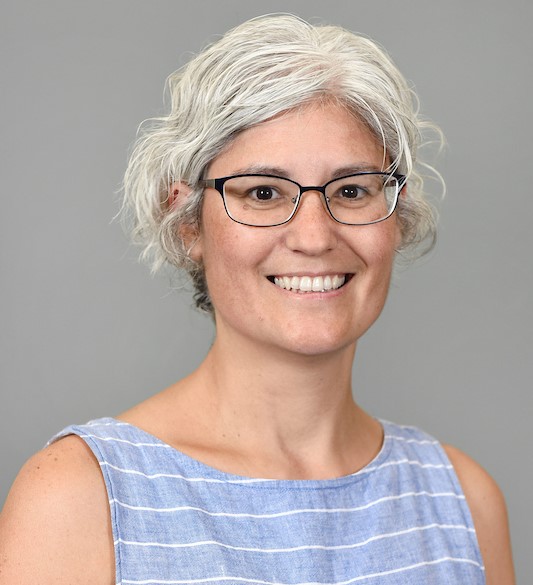
Malena Espanol, Arizona State University https://math.la.asu.edu/~mespanol/
Biography: Malena Espanol is an Associate Professor in the School of Mathematical and Statistical Sciences at Arizona State University. She holds a Bachelor’s degree in Applied Mathematics from the University of Buenos Aires and a Ph.D. in Mathematics from Tufts University. Before ASU, she completed a postdoctoral fellowship at Caltech and was a faculty member at The University of Akron. Malena’s research focuses on developing mathematical models and numerical methods for challenges in materials science, image processing, and medical applications. She has supervised over 60 research students and mentored many more through the AWM Mentor Program and the Math Alliance. A Project NExT Fellow (Brown ’13), she co-organized the 2018 Women in Mathematics of Materials workshop and co-edited a related Springer AWM Series volume. In 2023, she co-organized the AMIGAs summer program for applied mathematics graduate students. Malena has served on MAA, AWM, and SIAM committees and is currently on the Education Advisory Board at ICERM. In 2022, she was named a Karen EDGE Fellow and received the 2024 Deborah and Franklin Tepper Haimo Award.
Motivation: The BE is a great program and in particular GAGS are a great way to help and meet the participants in a more interactive way!
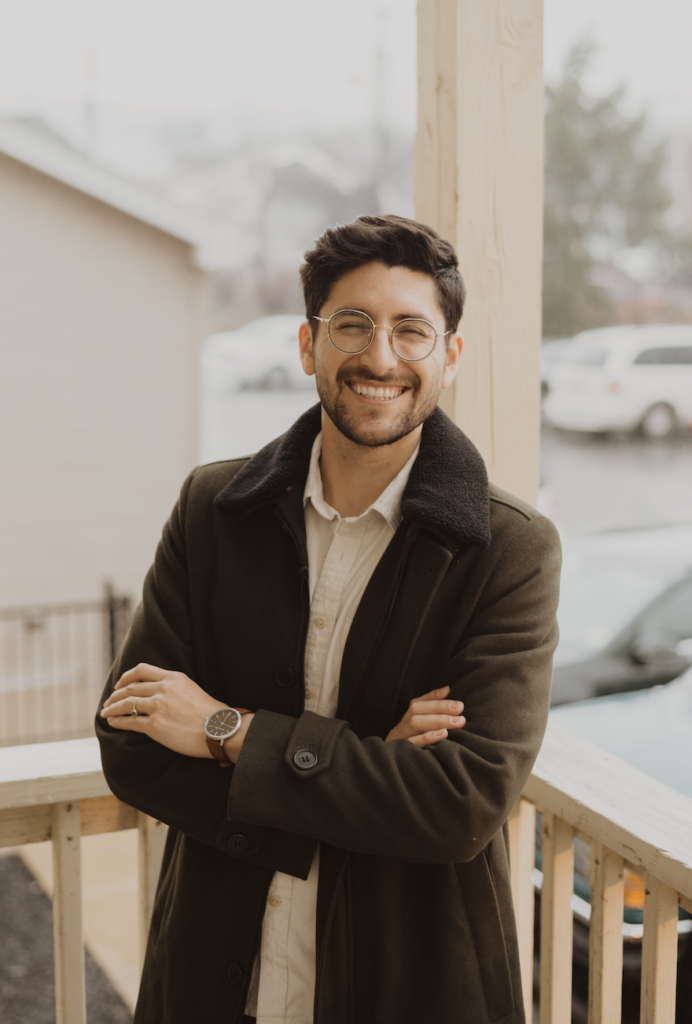
Rafael Ceja Ayala, Arizona State University
he/him/his, https://rafaelcejaayala.com/
Biography: My name is Rafael Ceja Ayala, and I am currently a Presidential Postdoctoral Fellow at Arizona State University, working under the mentorship of Dr. Malena Espanol. I earned my Ph.D. in Applied Mathematics from Purdue University, where I was mentored and advised by Dr. Isaac Harris. Originally from Mexico, my family and I moved to the small town of Ukiah in Northern California when I was 14 years old. My research interests lie in Inverse Problems for Partial Differential Equations, focusing specifically on transmission eigenvalues and the reconstruction of small and extended regions using tools from Functional Analysis and Scattering Theory. These problems have important physical applications, such as nondestructive testing and detecting defects in complex structures. I am deeply passionate about supporting students in mathematics. Through my research and teaching, I aspire to make a meaningful impact in the mathematics community and help bridge the gap between students and their access to higher education. In my free time, I enjoy reading and writing poetry, playing sports, hiking, and photography.
Motivation: As a Guided Affinity Group leader, I am excited about the opportunity to foster collaboration, innovation, and creativity not only within my group but also in other groups. I believe my experiences in organizing research activities and engaging with the mathematics community will allow me to guide the participants toward advancing our field, by sparking their research interest, growing in terms of professional development, and interacting in meaningful conversations that will benefit the participants and their respective institutions. I am not only hoping to motivate the participants to contribute their ideas and perspectives, but also, to discover new information that will be beneficial in the long run by collaborating. I hope that I can give the participants resources and skills to tackle complex challenges and discover meaningful solutions through collaborative work and sharing perspectives. In exchange, I am thrilled to also receive feedback and learn from the participants. As a group leader, I hope that I can help others become leaders and discover their potential to create safe and comfortable spaces for others in the mathematical community to keep fostering collaboration in research, teaching, and professional development. With my skills and enthusiasm, I will support the team members and facilitate meaningful discussions that advance our shared mathematical goals.