
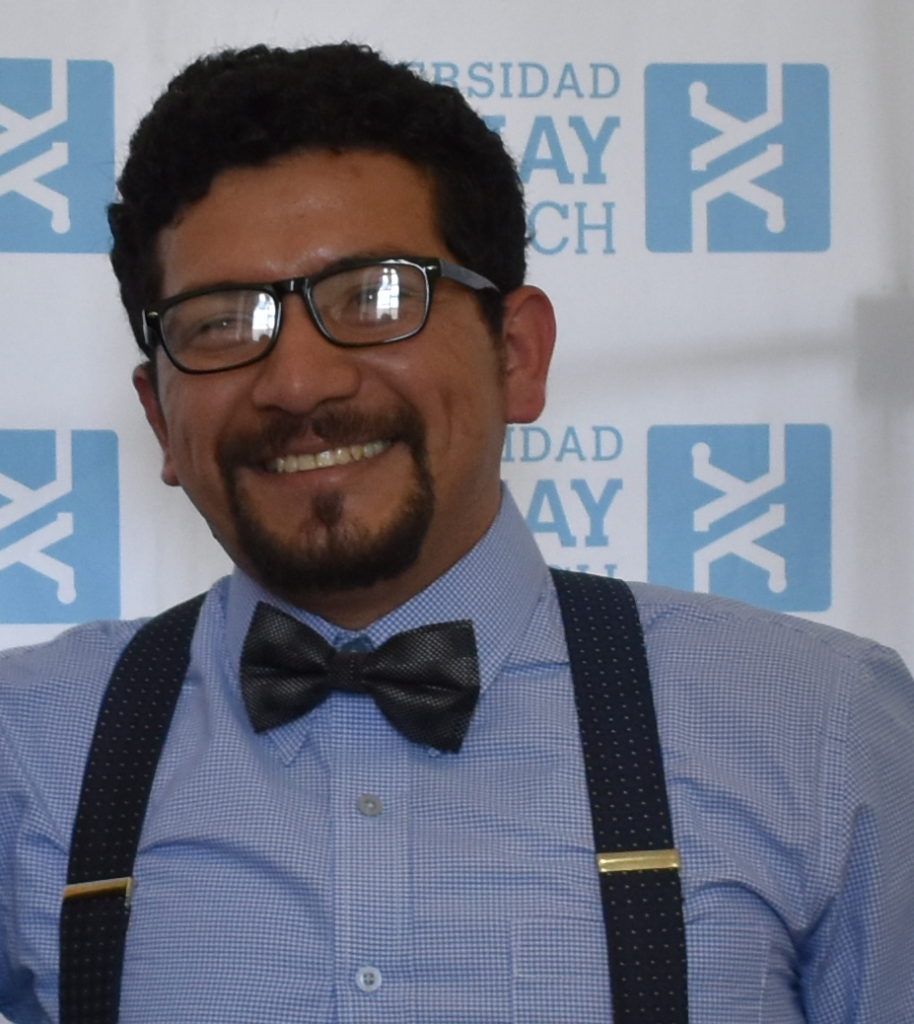
Name: Jordy Cevallos
Pronouns:
Institution: Arizona State University
Department: School of Complex Adaptive Systems
Biography:
I am a dedicated mathematician with a Master of Science in Applied Mathematics for the Life and Social Sciences, earned in 2021 from Arizona State University. I began my academic journey with a Bachelor of Science degree in Mathematics from Yachay Tech University, where I conducted research under the mentorship of Prof. Juan Mayorga-Zambrano, focusing on the Concentration and Multiplicity of Solutions for a Non-Linear Schrodinger Equation with critical Frequency, particularly in the Exponential Case. Throughout my academic career, I’ve actively engaged in impactful research projects, including studies on the impact of sexual behavior on HPV transmission, mathematical modeling of trust in automation and decision making, and the construction of compartmental models to predict population and hierarchical dynamics in social insects like Harpegnathos saltator. My work has also extended to ecological studies, such as quantifying the impact of chronic lead toxicity on the American Bald Eagle population in the Great Lakes Region. My passion for mathematics and research has driven me to explore a wide range of topics, from mathematical modeling of social interactions and metabolic costs to understanding the dynamics of infectious diseases like COVID-19.
Academic Status: PhD Student
Year in program: 4th
Research Area/Department: Applied Mathematics; Mathematics
Other, specify:
Major/Specialty: Applied Mathematics for the Life and Social Sciences
Degrees Earned or in Progress: Bachelor in Mathematics/ Mathematics/ 2019 Master in Science in Applied Mathematics for the Life and Social Sciences/ Applied Mathematics/2021 PhD. Applied Mathematics for the Life and Social Sciences/Applied Mathematics/2025
What courses or academic preparation have you completed to prepare for a summer internship experience?
Stochastic Modeling in Biology Delay Differential Equations for Life Sciences Dynamics, Computation and Statistics in Biosciences Foundations Machine Learning Models in Social Evolution Ecological Modeling Additionally, I completed the following classes during my undergraduate program (Mathematics) Variational Calculus, Numerical Methods for Partial Differential Equations, Numerical Analysis
Have you published any research or worked on research/technical projects? Yes
Where has your research been published or where have you conducted research/technical projects? Carlos Bustamante-Orellana, Dingyong Bai Jordy Cevallos-Chavez, Yun Kang, Benjamin Pyenson, Congbo Xie. Hierarchy Establishment from Nonlinear Social Interactions and Metabolic Costs: an Application to the Harpegnathos saltator. Applied Sciences. 2022; 12(9):4239. DOI: 10.1080/08898480.2021.1983323. Christine Brasic, Latimer Harris-Ward, Fabio A. Milner, Carlos Bustamante- Orellana, Jordy Cevallos-Chavez & Leon Arriola. Lead toxicity in the bald eagle population of the Great Lakes region, Mathematical Population Studies, 2021; DOI: 10.3390/app12094239. Ariel Aguas-Barreno, Jordy Cevallos-Cha¡vez, Juan Mayorga-Zambrano, and Leonardo Medina-Espinosa. Semiclassical asymptotics of infinitely many solutions for the infinite case of a nonlinear Schrodinger equation with critical frequency. Bulletin of the Korean Mathematical Society, 2021; DOI:10.4134/BKMS.b210307 Jordy Cevallos-Chavez. Adaptation in Metapopulation: Book Review. Bionatura, 2021; Vol. 6, issue 2. pgs. 1880-1881, DOI. 10.21931/RB/2021.06.02.32. Lilian Maritza Spencer, Markus P Tellkamp, Nelson F Santiago Vispo, Isidro R Amaro, Jordy J Cevallos-Chavez, Sophia N Anchali, Dalia N Cabada, Mariana M Arcos, Maria J Aldaz. Evaluation of avian malaria in an inter-Andean dry forest of Imbabura Province in Ecuador , 2021. Christine Brasic, Latimer Harris-Ward, Gregoire Moreau, Carlos Bustamante- Orellana and Jordy Cevallos-Chavez. Quantifying the Impact of Chronic Lead Toxicity on the American Bald Eagle (Haliaeetus leucocephalus) Population in the Great Lakes Region. 2020; Technical Report for MTBI 2020. DOI 10.13140/RG.2.2.28953.24166. Carlos E Bustamante Orellana, Jordy Cevallos-Chavez, Cesar Montalvo, Jeff Sulliavan, Edwin Michael, Anuj Mubayi. Modeling and Preparedness: The Transmission Dynamics of COVID-19 Outbreak in Provinces of Ecuador. 2020. Devin Akman, Carlos Bustamante, Jordy Cevallos-Chavez, Cui-Hua Wang, Jordan Bates, Viswanathan Arunachalam, Leon M Arriola, Baojun Song. Modeling an Anthrax Plume: Prioritizing the Delivery of Antibiotics After an Anthrax Bioterrorism Event, 2018; Technical Report for MTBI, Arizona State University, 2018.
Please describe your research/academic interests:
Dynamical Systems, Applied Mathematics, Mathematical Modeling, Mathematical Analysis, Stability Analysis, Mathematical Biology, Nonlinear Dynamics, Infectious Diseases, Sexually transmitted infections, Public Policies, Public Health
Computational and Data Science Areas:
Applied Mathematics; National Security; Data Analytics and Visualization
Research Synergy:
I am highly interested in computational and data sciences research because I believe these fields offer immense potential for solving real-world problems. My enthusiasm for these areas ties closely with my passion for mathematical modeling and data analysis. Participating in the SRP program and collaborating with DOE Lab staff excites me for several reasons. Firstly, it provides a chance to acquire advanced skills and knowledge in computational and data sciences. These fields are crucial for addressing complex challenges we face today. Moreover, my interest aligns well with the work at DOE labs. These labs conduct research related to energy, the environment, and national security, which generates substantial data. By working with lab experts, I can contribute to their ongoing projects while gaining valuable experience. My journey in mathematical modeling and data science started during my undergraduate studies and has continued through various research projects. I am committed to pushing the boundaries of these fields and see the SRP program as a way to do just that. By collaborating with DOE labs, I hope to contribute to their work and enhance my own skills, ultimately advancing computational and data-driven research.
Motivation:
I strongly believe that participating in this program will allow me to acquire new skills and knowledge that will make me grow both professionally and personally. I am looking forward to working with other people who are as passionate about mathematical modeling and data science as me. I am also figuring out my career path after graduation and I think that an internship in one of the national labs participating in the program will give me a good insight into how a career there would be. This would definitely help me decide where I will continue my career. My participation in this program will also help me gain more experience in this field and learn new techniques that I could implement in my own research. I believe my interest in data science, mathematical modeling and applied mathematics in general, started when I was an undergraduate student. Since then, I have participated in several research projects that involve mathematical modeling, data science, and I would like to continue learning and improving my skills in the field. I am very committed to confronting challenges, and I consider this program as one of them.
Lightning Talk Title: Sexual Behavior in Sexually Transmitted Infections