
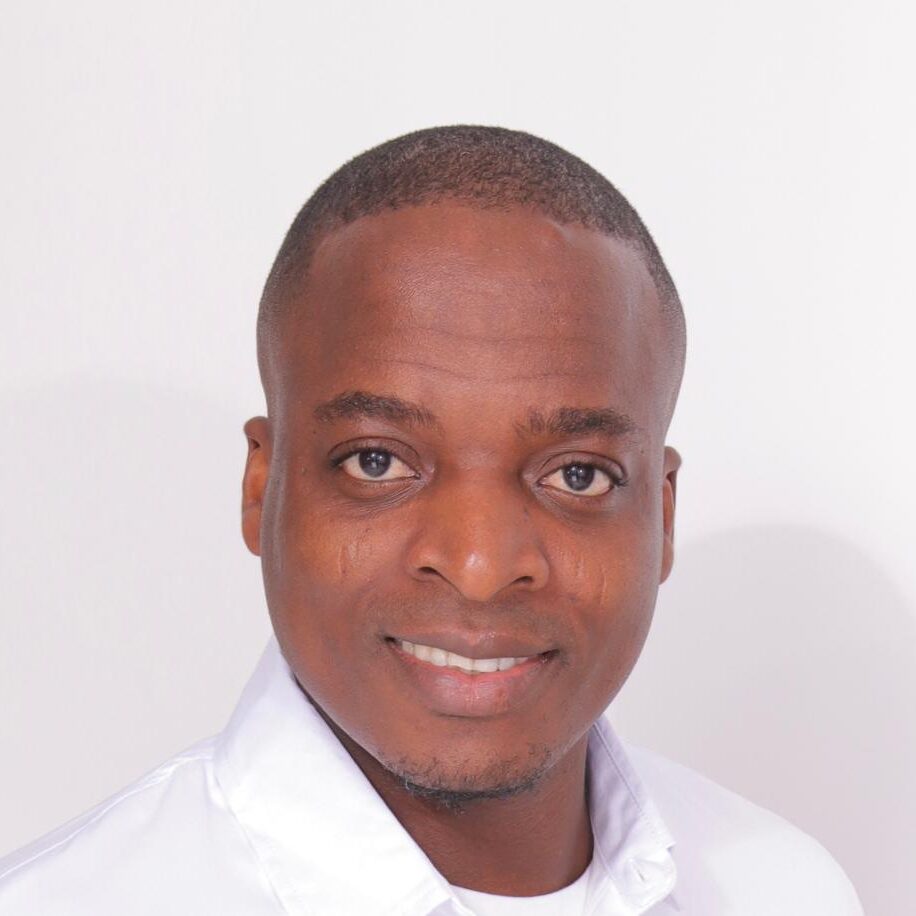
Name: Kazeem Kosebinu
Pronouns: He/Him/His
Institution: University of Tennessee, Knoxville
Department: Industrial and Systems Engineering
Biography:
I am a dedicated and passionate student with a strong affinity for mathematics and a keen interest in quantum research. Currently, I am pursuing a Doctoral program in Industrial and Systems Engineering at The University of Tennessee, Knoxville. My academic journey commenced at Lagos State University in Nigeria, where I earned a Bachelor of Science in Mathematics, and continued at East Tennessee State University in the USA, where I attained my Master’s degree in Mathematical Science. Beyond my academic endeavors, I have garnered valuable professional experience. I served as a Research and Planning Officer at the Lagos State Waterways Authority, where I excelled in data analysis and financial management, ultimately receiving recognition as the “”Best Officer of the Year”” in 2018. Furthermore, I have contributions to education as a Mathematics teacher, diligently preparing students for both national and international examinations. I am an active volunteer, actively participating in literacy programs and organizing tutorials for students in need. My leadership roles encompass serving as a class governor, actively engaging in student union activities, assuming responsibilities within the National Association of Mathematics Students of Nigeria.
Academic Status: PhD Student
Year in program: 3rd
Research Area/Department: Engineering
Other, specify:
Major/Specialty: Industrial and Systems Engineering
Degrees Earned or in Progress: Masters in Mathematical Science, 2021 PhD in Industrial and Systems Engineering, 2026
What courses or academic preparation have you completed to prepare for a summer internship experience?
Introduction to Quantum Algorithm Advanced Optimization via simulation Stochastic Programming Optimization Methods Integer Programming 2023 Gene Golub Summer School (G2S3) on Quantum Computing and Optimization at Lehigh University in Bethlehem, PA, USA
Have you published any research or worked on research/technical projects? No
Where has your research been published or where have you conducted research/technical projects?
Please describe your research/academic interests:
The main bottleneck for quantum computing is caused by reliability of gates. As the number of gates used in a circuit increases, the error rate also increases exponentially. This can lead to the need for more samples to obtain accurate solutions, which can result in long computation times that negates any potential time savings. To address this issue, we aim to reduce the number of gates required to implement the quantum approximate optimization algorithm (QAOA), a leading quantum optimization algorithm. QAOA is a quantum algorithm that was introduced by Farhi et al. in 2014. The algorithm is designed to solve combinatorial optimization (CO) problems by mapping them to a quantum Hamiltonian, and then using a circuit to implement a time-dependent evolution of the system. My research interests lie in the development of efficient circuits for implementing multi-angle quantum approximate algorithm (ma-QAOA) on near-term quantum devices, through the application of integer programming techniques. The goal of this research is to address the challenge of designing circuits that can achieve high levels of accuracy and scalability, while minimizing the number of qubits required and reducing the overall computational cost. To achieve this objective, I will first explore different approaches to circuit design, including the use of various building blocks and gate sequences. I will then apply integer programming techniques to develop optimization models that seek to minimize circuit complexity and maximize performance. These models will be used to solve different combinatorial optimization (CO) problems and evaluate the performance of the circuit on various instances.
Computational and Data Science Areas:
Quantum Computing and Information Science
Research Synergy:
My research interest centers around optimizing the circuit for the multi-angle quantum approximate optimization algorithm (ma-QAOA). I am drawn to this field because quantum computing holds immense promise for tackling complex problems, particularly in combinatorial optimization. Combinatorial optimization problems are prevalent across diverse industries, from logistics to health care. Quantum computers have the potential to provide more efficient solutions compared to classical computers. This interest directly aligns with the research conducted at the Department of Energy (DOE) labs. Their work revolves around the quantum approximate optimization algorithm (QAOA). They investigate how the inherent structure of optimization problems relates to the depth of quantum circuits needed for effective solutions. In quantum computing, managing circuit depth is critical due to error accumulation, especially in noisy intermediate-scale quantum (NISQ) devices. Optimizing circuit depth for QAOA is vital for realizing quantum advantage in practical applications. In summary, my interest in ma-QAOA circuit optimization aligns with the transformative potential of quantum computing in combinatorial optimization. Collaborating with DOE lab staff on this research can significantly contribute to the practical use of quantum computing in solving real-world optimization challenges.
Motivation:
As a doctoral candidate in Industrial and Systems Engineering, I recognize the immense potential of quantum computing in solving complex optimization problems. Quantum computing offers the promise of more efficient and sustainable solutions, making it a natural fit for my research interest and academic pursuits. Being accepted into two prestigious summer schools in 2023, particularly the Gene Golub SIAM Summer School (G2S3) on quantum computing and optimization at Lehigh University and the USQIS Summer School at SQMS Center, Fermi National Accelerator Laboratory, was a significant factor in motivating me to pursue this internship. These acceptances showcased my genuine interest and commitment to quantum computing and information science, as well as my potential to contribute meaningfully to the field. Attending the Gene Golub SIAM Summer School provided me with valuable insights into quantum computing and optimization, which deepened my understanding of the subject. I gained exposure to cutting-edge research, interacted with leading experts, and developed a network within the quantum computing community. This experience fueled my passion for further exploration in this area.
Lightning Talk Title: Minimum Swap Algorithm and Gate Scheduling