
With Changho Kim from University of California, Merced and Silvia Crivelli from Lawrence Berkeley National Laboratory
Relevant conference themes: Biological and biomedical computations; CSE applications; CSE software; High-performance computing; Multiscale, mutiphysics, and multilevel methods; Stochastic model and uncertainty quantification
Abstract: Abstract: Simulation and computational methods are great tools to study various biological and chemical processes. While there is a plethora of well-known and established methods for biological and chemical applications, these are not always fully comprehended by users. In other words, they are sometimes treated like “black boxes”. As prospective applied mathematicians and computational scientists, we are bound to examine and understand how these methods work. In this GAG, we will discuss these various computational methods and learn various topics ranging from underlying modeling assumptions to relevant high-performance computing techniques. We will also discuss recent models and approaches for biomedical data, including the use of AI, large language models and foundation models. Advancements in large language models and foundation models combined with the exponential growth of medical literature and the availability of electronic health records (EHR) data, have fueled significant interest in building similar models for healthcare and medicine. We will discuss the development of one of the largest clinical foundation models as well as a set of clinically relevant tasks that we are using to compare the performance of these models.
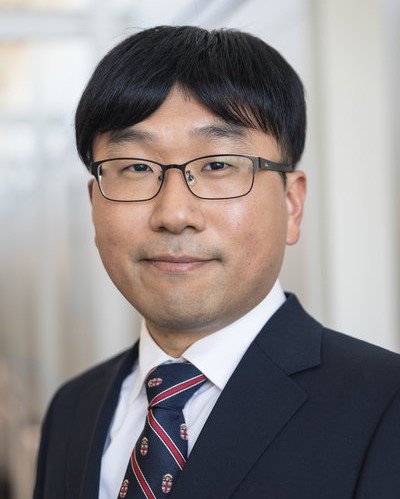
Changho Kim, University of California, Merced
he/him/his
Biography: Changho Kim is Assistant Professor of the Department of Applied Mathematics at the University of California, Merced. His current research centers around stochastic modeling of multi-physics phenomena arising in fluids and soft matter at small scales. He develops and analyzes traditional and machine-learning-based simulation methodologies for stochastic multiscale simulations. Kim has been organizing various fun math activities, including the MathMagic event, the Problem of the Month, the Math Club, and Math Dances. In addition, he currently serves as the Application Chair for the Broader Engagement Program at the SIAM MDS24 and CSE25 Conferences.
Motivation: I believe that the program provides the correct way to promote and support the participation of students from all groups in STEM. In particular, the Guided Affinity Group is an efficient mechanism to establish strong trust relations with these students. I have been involved in organizing the program since CSE21. Based on my career and research specialty, I would like to contribute to the growth of students in the interface of applied mathematics and computational chemistry by leading the proposed GAG.
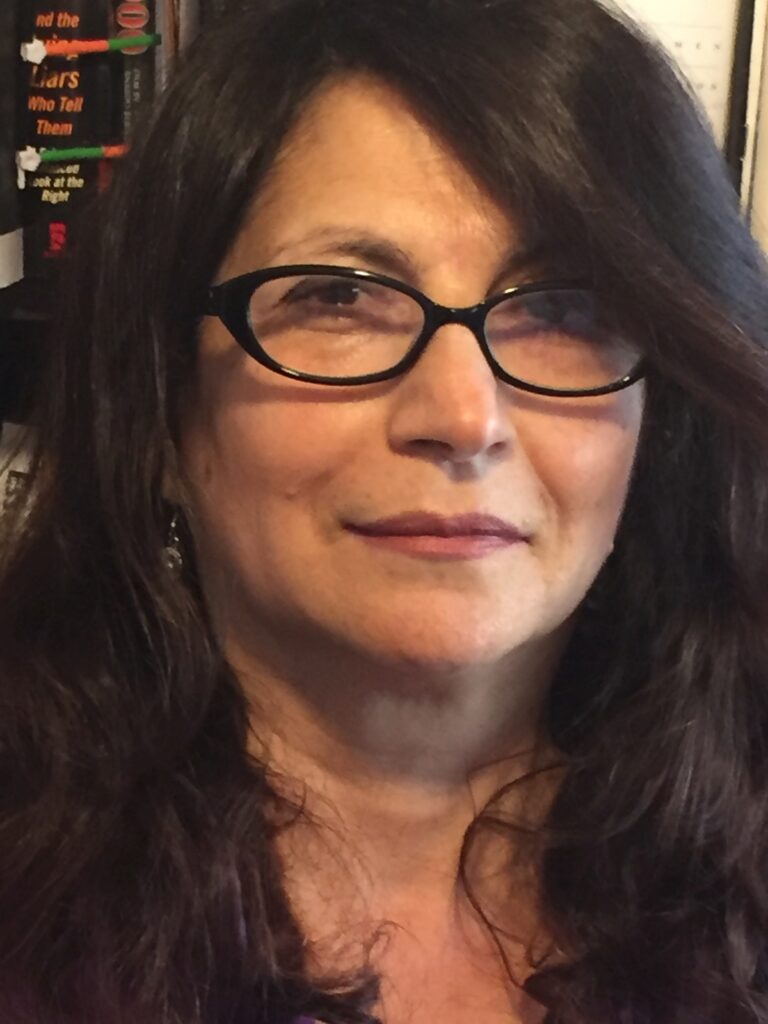
Silvia Crivelli, Lawrence Berkeley Lab
she/her/hers, https://crivelligroup.lbl.gov
Biography: Dr. Crivelli has conducted research at the intersection of science, high-performance computing, human-computer interaction, and applied mathematics for more than twenty-five years. Her research has focused on two main goals: 1) to bring scientists together, both seasoned and young and from all walks of science, to tackle long- standing, extremely hard, and multidisciplinary problems and 2) to develop methods and software tools that empower physicians and researchers to predict the behavior of biological systems and, more recently, healthcare outcomes. Her interest in developing AI technologies for scientific research and for societal benefit resulted in projects tackling a wide range of topics, which include the development of protein structure prediction methods, the creation of innovative software tools for protein and drug design, and the development of predictive models to decrease the number of deaths due to suicide and overdose. Her favorite professional activity is to mentor students. She has tirelessly worked on the mission to develop the workforce. She believes that progress in science will come from the rich combination of ideas that only a highly innovative community for all can create. She earned a Ph.D. in Computer Science from the University of Colorado, Boulder, and a M.S in Applied Mathematics from the Universidad Nacional del Litoral, Argentina. She was a postdoctoral fellow at the University of California, Berkeley and the Lawrence Berkeley National Laboratory (LBNL).
Motivation: Discussing a research topic with a group of students is one of my favorite activities because of the variety of ideas they contribute. In this particular case, I am very interested in tackling the problem of incomplete data and how they affect the AI models. I believe it will be productive to have a discussion that includes ideas from members from all backgrounds in topics that may affect them. In addition, I like to discuss the conference and presentations with the students and hear what they have learned and how they plan to use it in their work.