
Better Prepared and Better Positioned
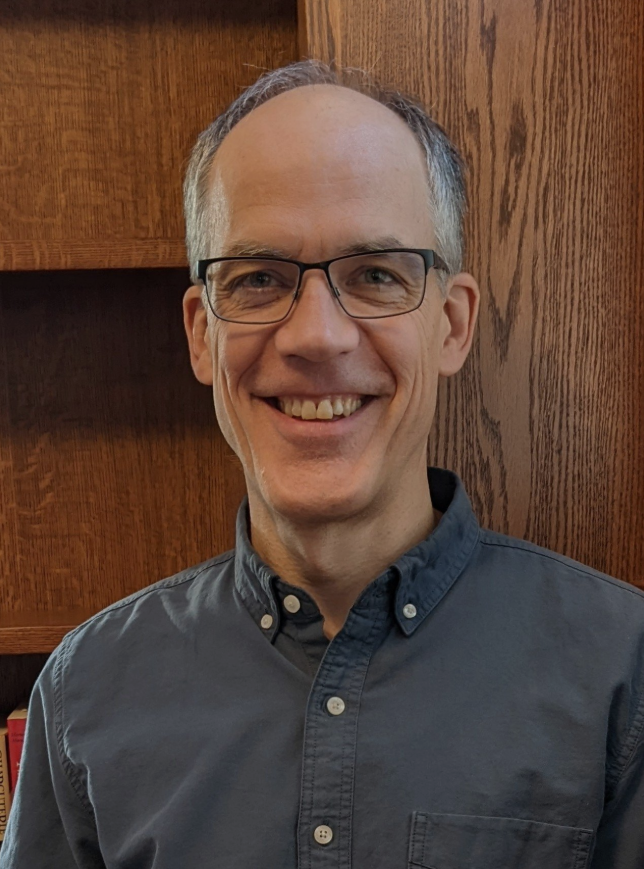
As a Research Development Strategist with the Strategic Partnerships and Research Collaborative at the University of Minnesota, Stephen Streng often serves as a mediator, helping IT and research teams throughout the university understand and achieve their common goals, including meeting increasingly stringent cybersecurity needs and requirements in government proposals. “However, academic research is an open science environment; putting up any kind of walls, not sharing is an anathema,” says Streng. “So when I learned about the Trusted CI Fellowship, I realized there was natural alignment and a way for me to deepen my understanding of cybersecurity for research.”
He became aware of the critical necessity of cybersecurity while in his previous position as a Food Defense Analyst at the University of Minnesota’s Food Protection and Defense Institute, where he conducted research and educated others about preventing intentional adulteration of the food supply. While there, he helped launch their efforts to combat cybersecurity threats, particularly to operational technology used in food production. As a result, he learned about new federal cybersecurity regulations and began to notice parallels between the risks in the manufacturing world and those in the scientific research world.
Because of what he learned through the Trusted CI Fellows program, he can engage in a richer conversation about federal cybersecurity requirements with faculty. “I can ‘translate’ those requirements, explain the importance of protecting their work from ransomware or funding cuts for non-compliance, and encourage them to reach out to the university’s information security team or their college’s IT department now,” says Streng. He can also explain to IT staff and information security teams why they shouldn’t load antivirus software on a laptop controlling a microscope bought a decade ago. (Once the laptop’s operating system is updated, then it will no longer interface with the microscope).
With an understanding of cybersecurity principles, university faculty will become better positioned for research proposals they might not have considered previously, such as a recent call for microelectronics and semiconductor research. “For the University of Minnesota, pursuing any kind of Department of Defense funding for research is pretty novel and because we were able to meet all the cybersecurity requirements, we nearly got that grant,” says Streng. “I would like to think that we got that far because we were able to demonstrate that in addition to having an extremely technically and scientifically strong proposal, we could deliver on the security requirements, which was a huge step for us. That is thanks, in part, to the Trusted CI Fellows program.”