How ASU’s Dr. Malena Español is Helping Students Find Their Place
“It is completely natural to feel hesitant or uncertain when attending for the first time, but the Building Engagement (BE) program is designed to welcome you and help you feel that you belong,” she says. “Ask questions, introduce yourself, participate in conversations… Most importantly, remember that you are not simply visiting this community. You are part of it, and you are part of its future.”
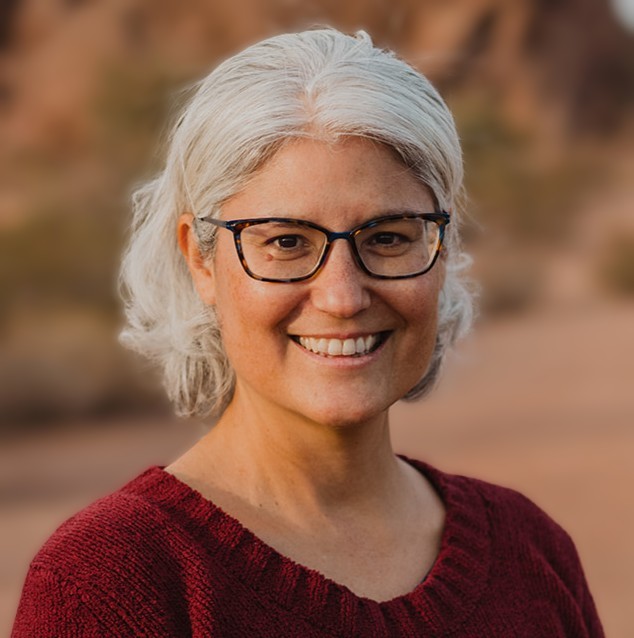
For many students stepping into a massive professional conference for the first time, the world of computational and applied mathematics can feel intimidating. Navigating dense technical sessions and rooms full of established researchers often leaves newcomers wondering if they truly belong. Dr. Malena Español, an Associate Professor of Computational Mathematics in the School of Mathematical and Statistical Sciences at Arizona State University (ASU), is working hard to change that narrative. Through her extensive work with the Sustainable Horizons Institute’s (SHI) Building Engagement (BE) program, Dr. Español has dedicated herself to ensuring that the next generation of computational scientists know they represent the future of the community.
Dr. Español’s involvement with the BE program runs deep. She has helped organize the initiative at major professional milestones, including SIAM CSE21, MDS22, MDS24, and CSE25, and is already working on the organizing committee for SIAM CSE27. In her role, she takes on the vital responsibility of recruiting leaders and forming Guided Affinity Groups (GAGs). By intentionally designing each group to be as interdisciplinary as possible, she ensures that participants can collaborate with and learn from peers with entirely different backgrounds, experiences, and perspectives.
As a GAG leader, Dr. Español finds her greatest professional fulfillment in fostering student confidence, an effort that has consistently yielded deeply personal and enduring professional relationships. This dedication is exemplified by her continued connection with Dr. Kristen Hallas, who concluded a prior BE program by presenting Dr. Español with a handwritten thank-you card and a token of appreciation; years later, Dr. Español still holds this card and actively celebrates Dr. Hallas’s ongoing career advancements on LinkedIn. Furthermore, during a BE networking breakfast, Dr. Español facilitated a pivotal introduction between Shelby Horth, a student at Wake Forest University, and her own PhD adviser, Misha Kilmer, a distinguished alumna of the same institution. Witnessing Shelby’s enthusiasm upon connecting with an esteemed graduate reinforced Dr. Español’s core conviction that projecting a shared background is often the precise catalyst a student needs to envision and realize their own future potential. Dr. Español’s involvement with SHI also includes the Sustainable Research Pathways (SRP) program, which connects U.S. researchers and project leaders with students and faculty from all across the U.S. and its territories. She has participated as a faculty member on several occasions, while some of her students have participated independently. Four of her students have taken part so far, including Isiaha Rodriguez, who spent last summer collaborating with Dr. Talita Perciano at Lawrence Berkeley National Laboratory, a project Isiaha continues to drive forward today.
For students who might be hesitant or feeling the weight of imposter syndrome before attending their first conference, Dr. Español offers powerful advice:
“Attend with an open mind and embrace every connection.”
Since 2007, the Building Engagement (BE) program has helped to kickstart the careers of the next generation of STEM researchers. The program joined the SIAM Computational Science and Engineering conference in 2015, and has welcomed over 350 students to this opportunity to develop their skills, engage with mentors, and truly become part of the community. Applications for the program are open now through November 9, 2026.