
Guided Affinity GroupS (GAGS) are designed to help students get more out of SIAM CSE conference sessions. Led by CSE volunteer community members, learning groups explore conference topics from an entry level perspective by meeting prior to the conference session, attending the conference session together, and then meeting afterwards. Attendees meet with affinity group leads virtually prior to the conference and then meet daily with leads. Attendees will provide a 5-10 minute presentation on what was discovered and learned from the experience at the Wrap up session.
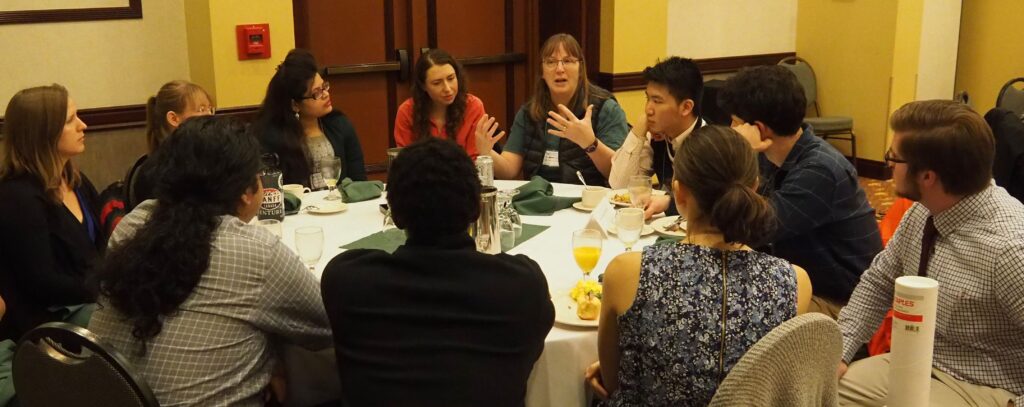
Guided Affinity Group Standups
First thing every morning at SIAM CSE25, the affinity groups will gather to discuss three questions:
- What did we learn yesterday?
- What are we planning on learning today?
- What do we need to do today to get the final presentation complete?
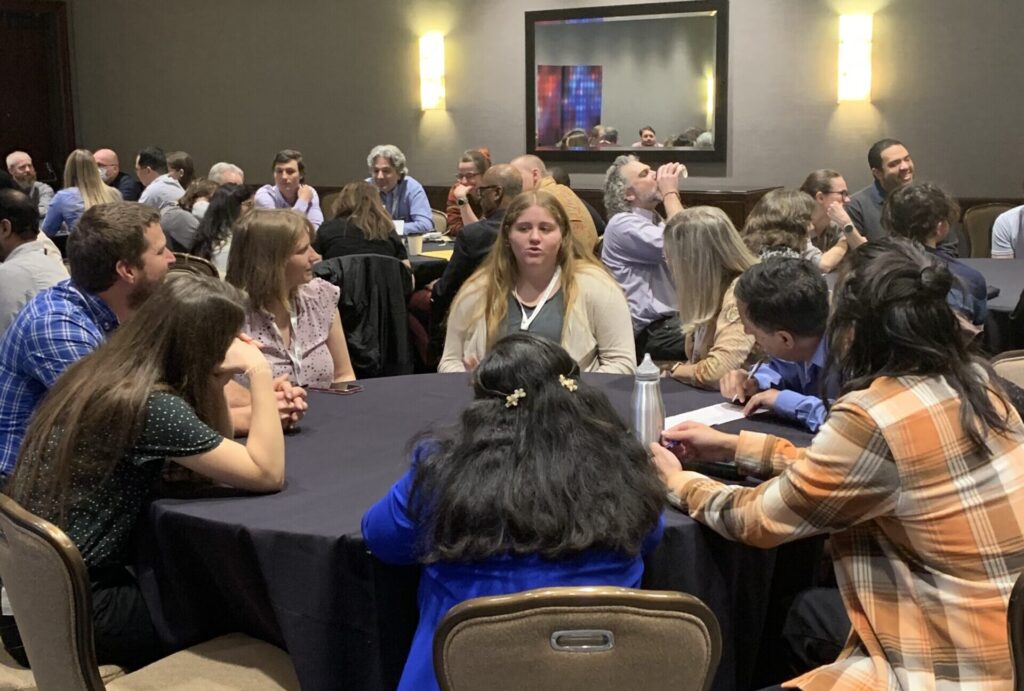
Guided Affinity Group Presentation
Each group will present for a maximum of 10 minutes during the BE Wrap Up Session. Best practices in presentations say that no more than 5 slides should be used. Students will be required to create and deliver this presentation. In the slides we’d like the group to talk about:
- What was their affinity group?
- What were the pedagogical goals of the team?
- Who was involved? (Leader, team, others?)
- What did they learn?
- What were the most effective ways to learn?
- Particular talks/researchers they felt helped them?
- What’s next?
Guided Affinity Groups
- Exploring Multiresolution, Multirate and Multiphysics Algorithms and Applications
 With Ann Almgren from Lawrence Berkeley National Laboratory Relevant conference themes: CSE applications; CSE software; High-performance computing; Multiscale, mutiphysics, and multilevel methods Abstract: Many of the most interesting physical phenomena occur across a range of space and time scales, and include multiple ...Read More
 - Inverse Problems and Applications
 With Malena Espanol from Arizona State University and With Rafael Ceja Ayala from Arizona State University Relevant conference themes: CSE applications; Inverse problems and data assimilation Abstract: In many physical systems, the internal structure of a material can only be inferred by ...Read More
 - Mathematics in applications
 With Daniel Martin from Lawrence Berkeley National Laboratory Relevant conference themes: CSE applications; CSE software; High-performance computing Abstract: Science applications are where the rubber meets the road for mathematics in CSE. Using the right math can help domain scientists and engineers solve ...Read More
 - Scientific Computing for Biological and Chemical Applications
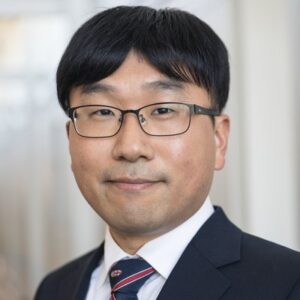 With Changho Kim from University of California, Merced and Silvia Crivelli from Lawrence Berkeley National Laboratory Relevant conference themes: Biological and biomedical computations; CSE applications; CSE software; High-performance computing; Multiscale, mutiphysics, and multilevel methods; Stochastic model and uncertainty quantification Abstract: Abstract: Simulation ...Read More
 - Trustworthy HPC and AI for Science
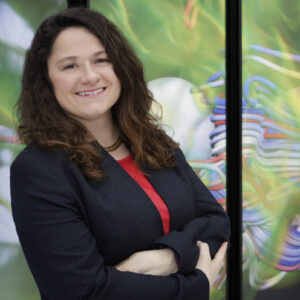 With Suzanne Parete-Koon from Oak Ridge National Laboratory Relevant conference themes: High-performance computing; Scientific machine learning Abstract: What makes us trust the models and simulations we use for research? What is required to ensure they produce accurate, meaningful, and reproducible science? Beyond ...Read More